
For the spouse holding everything together and the teenager who didn’t sign up for any of this — this one is for you.
“They’re the one deployed. I don’t have it as hard as they do.” I hear this almost every week. And every time, I gently push back — because your hard is real, too. It just doesn’t come with a uniform.
Let me say this clearly, the way I would if you were sitting in my office: the spouse at home and the children who wake up every morning wondering when their parent is coming back — you are not on the sidelines of this deployment. You are in it. Fully, exhaustingly, in it.
This blog is for you. Not as an afterthought. As the whole point.
To the Spouse Who Is Doing It All
You became a single parent the day the ship left port or the boots hit the tarmac. Not “kind of” a single parent — fully responsible for the kids, the bills, the car that just made a noise, the dog who is depressed, and your own fear that you’re not allowed to say out loud because you’re supposed to be strong.
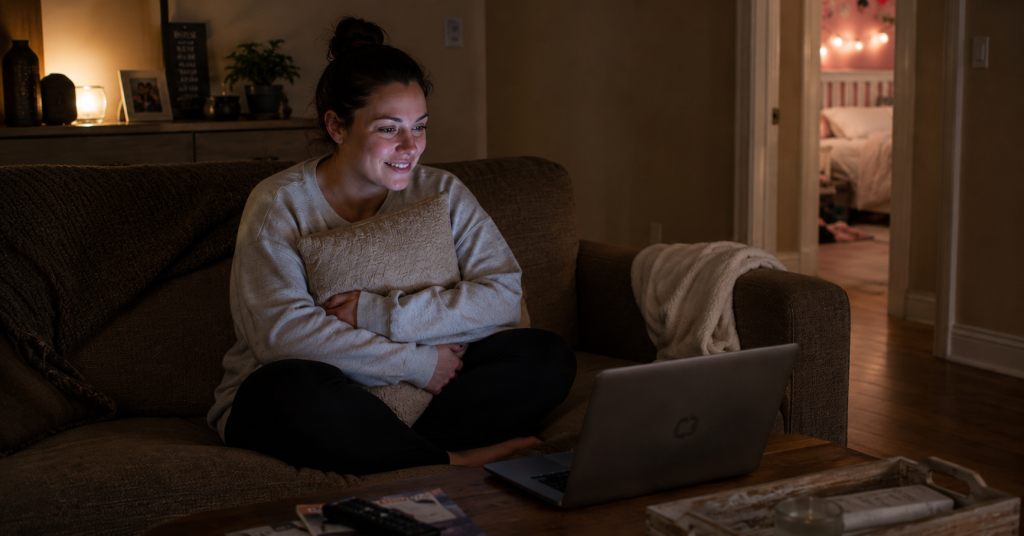
Military culture does something tricky to spouses: it borrows the stoicism of the service member and hands it to you too, without the training or the paycheck. You are expected to manage, adapt, and carry on — and many of you do, brilliantly — while quietly running on empty.
THINGS I HEAR FROM SPOUSES IN SESSION
“I feel guilty for being angry. They’re the one deployed.”
“I don’t want to burden them with our problems when they have enough over there.”
“I’ve gotten so used to doing everything alone, I don’t know how to let them back in.”
“I haven’t slept well in four months and I keep telling everyone I’m fine.”
Here’s what I want you to hear: your anger is not betrayal. Your loneliness is not weakness. And the fact that someone else has it harder does not mean you are not allowed to struggle.
The weight of ambiguous loss
There’s a term I use in therapy — ambiguous loss — that describes what happens when someone is gone but not gone. Your partner is alive, but they’re not here. You can’t fully grieve them, and you can’t fully move forward. You exist in a strange in-between, updating them on the kids over a choppy FaceTime call, then sitting in a quiet house and not knowing what to do with all that feeling.
For Navy families in Washington State, this can stretch for seven, eight, nine months at a stretch. That’s not a short absence. That’s a season of life you’re navigating mostly alone.
One client told me she found herself crying in the grocery store because her husband always picked the cereal and she didn’t know which one he’d want when he got back. That’s not silly. That’s grief wearing everyday clothes. We talked about it for a whole session.

When they come home
Homecoming is supposed to be the relief. And it is — but it’s also complicated in ways nobody warns you about. You’ve adapted. The routine is yours now. The kids answer to you. And suddenly there’s another adult in the house who doesn’t quite fit the grooves you’ve worn into your days.
Reintegration takes time, patience, and often some outside support. It doesn’t mean your relationship is broken. It means you’re both human.
FOR THE TEENS
To the Teenager Who Didn’t Get a Vote
You didn’t choose military life. You were born into it, or it arrived when you were too young to have an opinion, and now here you are — managing school, friendships, social media, and the very particular anxiety of having a parent somewhere overseas.
Teenagers in military families carry something that most of their peers can’t fully understand. When your teacher asks why your grade slipped, how do you explain that you haven’t been sleeping because you’re worried? When your friends complain about their parents being annoying, how do you respond when yours isn’t even there to be annoying?
THINGS TEENS OFTEN DON’T SAY OUT LOUD — BUT FEEL
“I don’t want to make Mom/Dad’s situation worse by telling them I’m struggling.”
“I feel like I have to be strong for my younger siblings.”
“I’m angry, and I feel guilty for being angry, and I don’t know what to do with either feeling.”“I just want things to feel normal. I don’t even know what normal is anymore.”
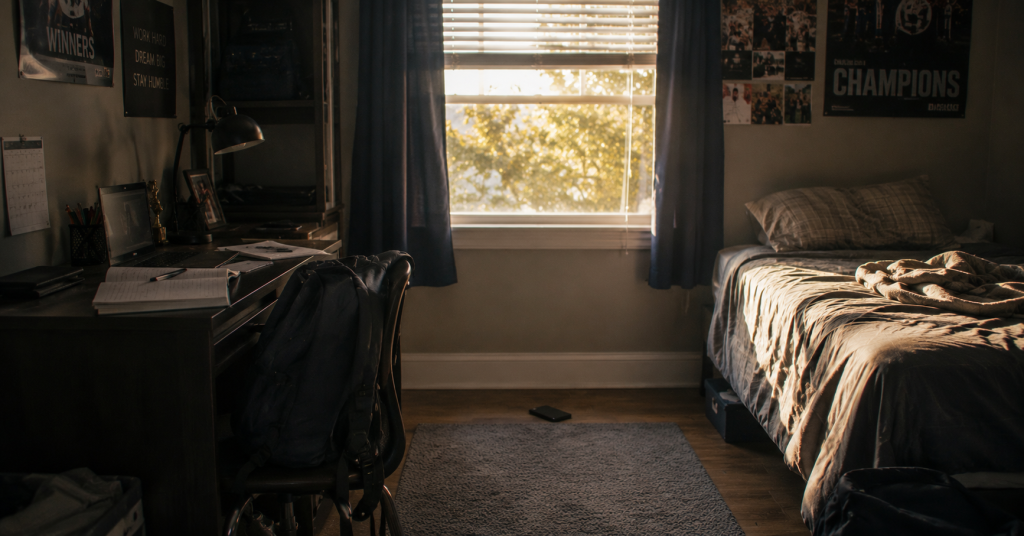
The anger, the withdrawal, the grades, the attitude — these are not character flaws. They are responses to an objectively hard situation. Teenagers are not equipped by age or experience to process fear of loss, long-term absence, and family disruption without support. Nobody is.
What therapy offers a teenager
The most powerful thing therapy gives a teen is language — words for the feelings that have been living in their chest without a name. Once they can name it, they can start to move it. “I’m not bad. I’m scared and sad and I didn’t know how to say that.”
I work with teenagers in a way that doesn’t feel like being sent to the principal’s office. It’s more like finally having a space where someone isn’t counting on you to be okay — where you’re allowed to not be okay, even just for an hour.
GRIEF & LOSS
You can grieve someone who is still alive
Families grieve missed birthdays, first steps, graduations, and ordinary Tuesday dinners. Teenagers grieve missed moments — the parent who wasn’t at the game, the conversation they needed to have that got postponed indefinitely.
Spouses grieve the version of their partner who left — and quietly wonder who will walk back through the door. That grief is real and it deserves to be named, not managed around.
In my practice, I’ve found that simply saying “You’re not broken. You’re grieving.” brings enormous relief. Naming it is the first step to moving through it.
This grief often goes unacknowledged because the service member is still alive and the mission is noble. But grief doesn’t require permission. It shows up anyway — as anger, numbness, or a teenager who suddenly stops talking. Part of what we do in therapy is make room for it.
TRAUMA & HEALING
When It Goes Deeper Than Stress
Secondary trauma is real — and it affects families
You don’t have to be the one deployed to experience trauma. Spouses who have spent months in survival mode, operating on fear and adrenaline and too little sleep, often develop anxiety, hypervigilance, and emotional exhaustion that looks a lot like trauma — because it is.
Teenagers who grow up in households marked by long absences, difficult homecomings, and the constant background hum of worry can internalize that stress in ways that show up years later if they’re not given space to process it now.I am experienced in trauma therapy, and I want you to know: what your family is carrying is treatable. You don’t have to stay in survival mode.
Evidence-based approaches — including trauma-focused CBT, EMDR-informed work, and somatic grounding techniques — can help both the spouse and the teenager begin to feel safe in their own nervous systems again. That’s not a small thing. That’s everything.
HOW THERAPY HELPS
How CBT Gives You Tools, Not Just Insight
Cognitive Behavioral Therapy works well with military families because it’s practical. It gives you something to do with the hard feelings — not just a place to sit in them. CBT is built on the connection between thoughts, feelings, and behaviors, and it’s particularly useful when stress has put those connections into overdrive.
For spouses, we use CBT to untangle the guilt, challenge the “I should be able to handle this alone” narrative, and build sustainable coping strategies that don’t rely on willpower running on fumes.
For teenagers, CBT provides structure — a way to look at their thoughts and behaviors and understand why they’re feeling what they’re feeling, without judgment and without being told to just cheer up.
Thought Records
Catching unhelpful automatic thoughts, checking the evidence, and building a more balanced view — powerful for both anxious spouses and overwhelmed teens.Behavioral Activation
When depression flattens everything, we rebuild small, meaningful actions. Even one purposeful thing per day can begin to shift the emotional landscape.
Cognitive Restructuring
Challenging the “I’ll never feel normal again” story — especially useful for spouses navigating reintegration and teenagers re-anchoring after a long absence.Grounding Techniques
For the anxiety that lives in the body — the tightness, the hyper-vigilance, the waiting. Grounding brings the nervous system back to the present moment.
I’M HERE FOR YOU
This Space Is For You — Not Just the Service Member
One of the things I’m most intentional about in my practice is making sure that the people who aren’t deployed know they belong in a counseling office too. So much of the mental health conversation in military communities centers on the service member — and that conversation matters. But so does this one.
The Spouse at Home
You are allowed to need support while also being proud of your partner’s service. Those two things are not in conflict. You don’t have to earn your way into this office by suffering enough.The Teenage Child
You are not broken. You are not too much. You are a young person dealing with something genuinely hard — and you deserve a space that treats you that way, not like a problem to be solved.
Whether you are three weeks into a deployment or three months past homecoming, whether things feel manageable or completely underwater — you are welcome here. Transition is constant in military life. My door is open through all of it.

TRICARE WEST INSURANCE ACCEPTED
Getting support shouldn’t come with a financial barrier on top of everything else. I proudly accept Tricare West, so military families in Washington State can access the care they’ve earned.
If you’re unsure about your coverage or have questions about using your benefits, reach out — we’ll figure it out together.
✓ In-Network · Tricare West · Washington State
You don’t have to have it all figured out before you call. You can come in exactly as messy as you are. That’s kind of the whole point.